---
title: Large-Scale Condition Monitoring for F-18 Readiness and Safety
description: Discover how the US Navy reduced pressure-related physiological events in F-18 pilots by 80% using enDAQ sensors for predictive maintenance and enhanced flight safety.
image: https://info.endaq.com/hubfs/enDAQ-US-Navy-Case-Study-F18-Conditions-Monitoring-3.jpeg
---
[](https://endaq.com/)
- [Products](https://endaq.com/collections/endaq-shock-recorders-vibration-data-logger-sensors)
Products menu
- [All Data Loggers](https://endaq.com/collections/endaq-shock-recorders-vibration-data-logger-sensors)
- [Data Loggers: Standard](https://endaq.com/collections/endaq-shock-recorders-vibration-data-logger-sensors?_=pf&pf_t_series_type=Series%20Type__S3&pf_t_series_type=Series%20Type__S4)
- [Data Loggers: Large Battery](https://endaq.com/collections/endaq-shock-recorders-vibration-data-logger-sensors?_=pf&pf_t_series_type=Series%20Type__S5)
- [Data Loggers: Wi-Fi Enabled](https://endaq.com/collections/endaq-shock-recorders-vibration-data-logger-sensors?_=pf&pf_t_series_type=Series%20Type__W8&pf_t_series_type=Series%20Type__W5)
- [Mounting Kit](https://endaq.com/collections/endaq-accessories-for-sensor-protection)
- [Pelican Cases](https://endaq.com/collections/endaq-accessories-for-sensor-protection)
- [Water-Proof Enclosures](https://endaq.com/collections/endaq-accessories-for-sensor-protection)
- [Re-Calibrations](https://endaq.com/products/re-calibration-service)
- [Data Services](https://endaq.com/pages/optimize-overall-equipment-effectiveness-endaq-data-services)
Data Services menu
- [Re-Calibration](https://endaq.com/products/re-calibration-service)
- [NEW - Data Services](https://endaq.com/pages/optimize-overall-equipment-effectiveness-endaq-data-services)
- [Software](https://endaq.com/pages/data-analysis-software)
Software menu
- [Software Overview](https://endaq.com/pages/data-analysis-software)
- [LAB Configuration](https://endaq.com/pages/vibration-shock-analysis-software-endaq-slam-stick-lab)
- [Cloud Analysis](https://endaq.com/collections/endaq-data-cloud-platform)
- [Open Source Libraries](https://endaq.com/pages/endaq-open-source-python-library-for-shock-vibration-analysis)
- [Applications](https://endaq.com/pages/shock-vibration-environmental-sensor-applications)
Applications menu
- [All Applications](https://endaq.com/pages/shock-vibration-environmental-sensor-applications)
- [Vibration](https://endaq.com/pages/vibration-sensors-and-vibration-loggers-for-data-acquisition)
- [Shock & Impact](https://endaq.com/pages/shock-impact-sensors-and-recorders-resources)
- [Machine Learning](https://endaq.com/pages/training-machine-learning-models-with-vibration-data)
- [Environmental](https://endaq.com/pages/environmental-sensors-for-data-acquisition)
- [High Value Asset Monitoring](https://endaq.com/pages/shock-vibration-sensors-for-shipping-monitoring)
- [Wireless Monitoring](https://endaq.com/pages/wireless-vibration-monitoring-systems)
- [Resources](https://endaq.com/pages/shock-vibration-resources-center)
Resources menu
- [All Resources](https://endaq.com/pages/shock-vibration-resources-center)
- [Application Areas](https://endaq.com/pages/shock-vibration-environmental-sensor-applications)
- [Battery Life Estimator](https://endaq.com/pages/data-logger-battery-life-estimator)
- [Case Studies](https://endaq.com/pages/case-studies)
- [Free Datasets](https://endaq.com/pages/real-shock-vibration-tests-and-data)
- [Cheat Sheets](https://endaq.com/pages/cheat-sheets-vibration-shock-condition-based-monitoring)
- [Handbooks](https://endaq.com/pages/handbooks)
- [Video Tutorials](https://endaq.com/pages/shock-and-vibration-analysis-video-tutorials)
- [Webinars](https://endaq.com/pages/webinars)
- [Blog](https://blog.endaq.com/?hsLang=en)
Blog menu
- [Vibration Analysis: FFT, PSD, & Spectrogram](https://blog.endaq.com/vibration-analysis-fft-psd-and-spectrogram?hsLang=en)
- [Top 12 Vibration Metrics to Monitor](https://blog.endaq.com/top-vibration-metrics-to-monitor-how-to-calculate-them?hsLang=en)
- [6 Ways to Measure Vibration](https://blog.endaq.com/6-ways-to-measure-vibrations?hsLang=en)
- [Shock Analysis: Response Spectrum (SRS)](https://blog.endaq.com/shock-analysis-response-spectrum-srs-pseudo-velocity-severity?hsLang=en)
- [Accelerometer Selection: Take out the Guesswork](https://blog.endaq.com/accelerometer-selection?hsLang=en)
- [...All Blog Posts](https://blog.endaq.com/?hsLang=en)
- [Help Center](https://support.endaq.com/)
- [Contact](https://endaq.com/pages/contact)
Search
[Cart](https://endaq.com/cart)
Menu
Search enDAQ
Search
Military Aviation & Condition Monitoring Case Study
# **Large-Scale Condition Monitoring for F-18 Readiness and Safety**
This case study describes how the US Navy's Physiological Episodes Action Team used enDAQ sensors (formerly Slam Stick) to collect cabin air pressure data from F-18 flights at scale, identifying root causes of pilot physiological events and reducing pressure-related incidents by 80% through a new predictive maintenance program.
Impact at a glance
80% Reduction in Pressure-Related Physiological Events
By equipping every F/A-18 flight with enDAQ pressure sensors and developing the HhART monitoring program, the US Navy reduced pilot physiological events by 80% and shifted from reactive to predictive ECS maintenance.
US Navy NAVAIR · enDAQ Sensors (formerly Slam Stick) · 2,000+ active sensors
Executive Summary
## How the US Navy used enDAQ sensor data to eliminate a pilot safety crisis
When physiological events in F-18 aviators surged in 2017 — manifesting as hypoxia-like symptoms — flight instructors began refusing to train new pilots in their jets. The Navy's Physiological Episodes Action Team (PEAT) launched a multi-year investigation. After ruling out air contamination and oxygen deficiency, NAVAIR equipped F-18 aircrew with enDAQ sensors to record cabin air pressure during every flight, ultimately identifying failing Environmental Control System (ECS) components as the root cause — and building a predictive maintenance system that cut incident rates by 80%.
Challenge
**Surging Pilot Physiological Events** — A wave of hypoxia-like symptoms in F-18 aviators grounded training operations. Existing monitoring systems failed to identify the cause, requiring a large-scale investigative data collection effort.
Solution
**Fleet-Wide Pressure Monitoring** — enDAQ sensors were carried by aviators in flight to record cabin air pressure. Data was downloaded after each flight and analyzed alongside aircraft maintenance records to identify ECS failures.
Results
**80% Reduction in PEs**
The Hornet Health and Readiness Tool (HhART) was developed from sensor data, enabling predictive ECS maintenance. Over 2,000 enDAQ sensors are now in active fleet circulation for every F/A-18 flight.
[](https://cta-redirect.hubspot.com/cta/redirect/637862/36b0f5c6-c6d5-4a5e-852c-b8105235e493)
---
The Challenge
## A pilot safety crisis with no clear cause
When physiological events in naval aviators surged in 2017, the Navy's Physiological Episodes Action Team, led by Rear Admiral Fredrick Luchtman, launched a multi-year investigation. The situation had become critical — flight instructors were refusing to train new pilots in their jets. The safety of F-18 aviators and the operational readiness of the Navy's aircraft were both at stake.
The PEs manifested primarily as hypoxia symptoms. Early theories pointed to air contamination, insufficient oxygen supply, or an Environmental Control System design unsuitable for protecting human occupants. Extensive studies ruled out each of these hypotheses, leaving the investigation without a confirmed root cause.
- Physiological events surged in 2017, causing flight training disruptions across the F-18 fleet.
- Early hypotheses — air contamination, oxygen shortage, ECS design — were all ruled out.
- A large-scale, in-flight data collection effort was needed to identify the actual cause.
- Without a confirmed root cause, no targeted maintenance or design fix could be implemented.
- A reactive maintenance posture left aviator safety and aircraft readiness chronically at risk.
---
The Solution
## Pocket-sized sensors on every flight — building a fleet-scale pressure database
To further investigate the physiological events, Naval Air Systems Command (NAVAIR) equipped F-18 aircrew with enDAQ sensors to record cabin air pressure during flights. Because of the sensors' compact size and rechargeable battery, aviators could carry them in a flight suit pocket — making data acquisition seamless and scalable across the entire fleet.
After each flight, the air pressure data was downloaded and analyzed, then compared with aircraft maintenance data from the same jets. From this growing database, PEAT determined that while the ECS design itself was adequate, certain ECS components were failing — producing pressure abnormalities capable of causing severe physiological events in aircrew.
Having established the root cause, the team's focus shifted from investigation to prediction. The database of sensor readings, paired with maintenance records, allowed analysts to look backward and identify component degradation patterns before full failures occurred.
"...we are almost to the point where we can get predictive with our data analytics, to the point where we receive information from the fleet, we analyze that information, and then we can tell the fleet, hey this particular aircraft is exhibiting signs that this particular part may be needing to be replaced pretty soon."
— Rear Adm. Fredrick Luchtman, US Navy
- Sensors carried in aviator pockets during every F/A-18 flight — no aircraft modification required.
- Data downloaded post-flight and cross-referenced with maintenance records to identify ECS faults.
- Root cause confirmed: failing ECS components producing abnormal cabin pressure profiles.
- Database enabled retrospective identification of component degradation ahead of failure events.
---
---
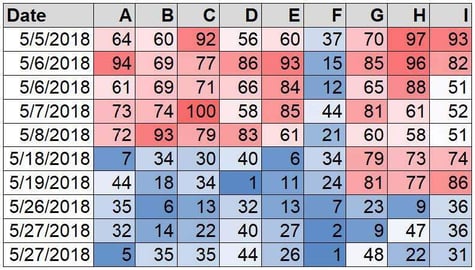Maintenance conducted between 5/8 and 5/18 that corrected identified ECS issues.
---
Results
## From crisis response to predictive maintenance — fleet-wide
80% reduction in pressure-related physiological events in F-18 aircraft since early 2019
80%
Total Reduction in pressure-related PEs since HhART implementation.
2,000+
enDAQ sensors in active fleet circulation.
100%
Of F/A-18 flights now equipped with pressure monitoring.
Through the accurate and reliable data provided by enDAQ's sensors, the Navy developed the Hornet Health and Readiness Tool (HhART) — a cockpit pressure monitoring and warning system capable of identifying underperforming ECS components before they cause incidents. Since HhART's implementation in early 2019, pressure-related physiological events in F-18 aircraft have fallen by 80%.
Beyond HhART, the Navy is installing CPOMS (Cockpit Pressure and Onboard Oxygen Monitoring Systems) across the entire F-18 fleet. These systems record air pressure and oxygen data in real time and send alerts to aircrew about potential aircraft problems — enabling proactive maintenance and furthering the shift away from reactive operations.
---
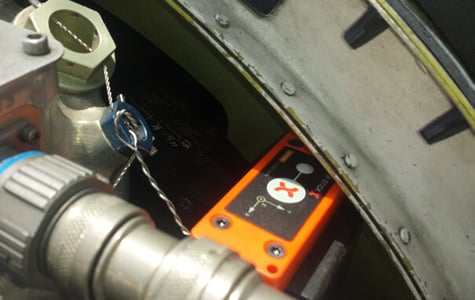
enDAQ sensor (formerly Slam Stick) in the engine housing of a
C-2 Greyhound (Source: US Navy photo)
---
"\[This\] is a tremendous paradigm shift in the way we do maintenance — we can actually identify parts that are sub-performing, replace those parts and prevent the PE from ever happening."
— Rear Adm. Fredrick Luchtman, US Navy
- HhART pilot program developed: cockpit pressure monitoring and warning system for fleet-wide use.
- Pressure-related PEs in F-18 aircraft down 80% since early 2019 implementation.
- CPOMS being installed across the entire F-18 fleet for real-time pressure and oxygen monitoring.
- Over 2,000 enDAQ sensors currently in active circulation across the Navy for this purpose.
- Data infrastructure now supports condition monitoring for shock, vibration, and noise in addition to pressure.
---
[](https://info.endaq.com/hs/cta/wi/redirect?encryptedPayload=AVxigLI2G1NbupWymI6XeQ%2BeZ5oOUPr3KCxhUdBKVaduOAXr0AuxAx41hywpI7yAfw8RcEzMVyYyUv5Tp8fmNjy%2FQrbBCViCWAJZ35bPAHqUyMvUAAlFu0S3g7Txmb9zO5YJ8DoA%2Fzl5c9CnRlTYNRJiS%2F3zEqMWnimQioa8T3KBFYaoZF%2B1CmqMhbMYJ6FU&webInteractiveContentId=192720055314&portalId=637862&hsLang=en)
---
Comparison: Reactive vs. Predictive ECS Maintenance
| Aspect | Reactive Maintenance (Before enDAQ) | Predictive Monitoring (With enDAQ) |
| --- | --- | --- |
| Detection timing | After a PE or equipment failure | Before failure — based on pressure trend analysis |
| Pilot safety | At risk until fault is identified and repaired | Protected through proactive component replacement |
| Aircraft readiness | Disrupted by emergency and deferred maintenance | Maintained through scheduled, data-driven intervention |
| Data visibility | Limited to post-incident maintenance records | Every flight recorded — fleet-scale pressure database |
| PE incident rate | Surging — instructors refusing to fly | Down 80% since HhART implementation |
---
### Frequently Asked Questions
What is a physiological event (PE) in aviation?
A physiological event is an in-flight incident in which a pilot experiences symptoms such as hypoxia (low oxygen), hyperventilation, or other physical impairment that can affect their ability to safely operate the aircraft. In the F-18 context, PEs were manifesting as hypoxia-like symptoms traced to abnormal cockpit pressure caused by failing ECS components.
What is the ECS and why do component failures matter?
The Environmental Control System (ECS) manages cockpit air pressure, temperature, and oxygen supply in fighter aircraft. When ECS components degrade or fail, they can produce abnormal pressure profiles that create hypoxia-like conditions for the pilot — even if the overall system design is sound.
How were enDAQ sensors carried during flights without modifying the aircraft?
The sensors' compact size and rechargeable battery allowed aviators to carry them in a standard flight suit pocket. No aircraft modifications were required, making fleet-wide deployment rapid and scalable.
What is HhART and how does it work?
The Hornet Health and Readiness Tool (HhART) is a cockpit pressure monitoring and warning system developed from analysis of enDAQ sensor data and aircraft maintenance records. It uses data analytics to identify ECS components that are underperforming and likely to fail, enabling proactive replacement before a PE can occur.
Can enDAQ sensors support monitoring beyond pressure data?
Yes. While the Navy's initial application focused on cabin air pressure, enDAQ recorders capture a comprehensive set of environmental parameters including vibration, shock events, and acoustic data. This multi-parameter capability supports broader condition monitoring programs beyond ECS pressure tracking.
[](https://info.endaq.com/hs/cta/wi/redirect?encryptedPayload=AVxigLI2G1NbupWymI6XeQ%2BeZ5oOUPr3KCxhUdBKVaduOAXr0AuxAx41hywpI7yAfw8RcEzMVyYyUv5Tp8fmNjy%2FQrbBCViCWAJZ35bPAHqUyMvUAAlFu0S3g7Txmb9zO5YJ8DoA%2Fzl5c9CnRlTYNRJiS%2F3zEqMWnimQioa8T3KBFYaoZF%2B1CmqMhbMYJ6FU&webInteractiveContentId=192720055314&portalId=637862&hsLang=en)
---
Project Details
Key information for engineers
**Customer:** US Navy / NAVAIR
**Program:** Physiological Episodes Action Team (PEAT)
**Aircraft:** F/A-18 Hornet
**Application:** Cabin pressure condition monitoring
**Primary Product:** enDAQ sensors (formerly Slam Stick)
- 2,000+ sensors in active fleet circulation
- Every F/A-18 flight now records pressure data
- 80% reduction in pressure-related PEs
- HhART predictive tool developed from data
- CPOMS fleet installation underway
"\[This\] is a tremendous paradigm shift in the way we do maintenance — we can actually identify parts that are sub-performing, replace those parts and prevent the PE from ever happening."
— Rear Adm. Fredrick Luchtman, US Navy
[](https://cta-redirect.hubspot.com/cta/redirect/637862/36b0f5c6-c6d5-4a5e-852c-b8105235e493)
---
# Book a Demo
### Welcome. Our product engineers are happy to listen & guide you through the best options for your application:
- Which is the best [enDAQ Data Logger](https://endaq.com/collections/endaq-sensors-shock-vibration-s-series) for my application? What are its features, and can I see an analysis example pertinent to my application?
- How can your software, including the [enDAQ Cloud](https://endaq.com/collections/endaq-cloud-remote-vibration-monitoring) help me upload, customize, visualize, and share my data?
[](https://endaq.com/)
[enDAQ.com](https://endaq.com/)
Division of [Mide Technology](https://www.mide.com/?utm_source=endaq-com&utm_medium=text-link&utm_campaign=link-from-endaq-footer&utm_term=endaq&utm_content=link-from-endaq-footer-to-mide)
475 Wildwood Avenue
Woburn, MA 01801
United States
Mide is a [Hutchinson Company](https://www.mide.com/about-mide#hutchinson)
[Resources](https://endaq.com/pages/learn-sensors-data-acquisition-analysis)
- [Help Center](https://support.endaq.com)
- [How to Generate a Quote](https://endaq.com/pages/how-to-generate-a-quote)
- [Application Areas](https://endaq.com/pages/shock-vibration-environmental-sensor-applications)
- [Test Examples with Data](https://endaq.com/pages/real-shock-vibration-tests-and-data)
- [Unit Donation Program](https://info.endaq.com/endaq-vibration-sensor-donation-program?hsLang=en)
- [Blog](https://blog.endaq.com?hsLang=en)
[Products](https://endaq.com/pages/endaq-product-availability-page)
- [Sensors Catalog](https://endaq.com/pages/endaq-product-availability-page)
- [Accessories](https://endaq.com/collections/accessories)
- [Testimonials](https://endaq.com/pages/endaq-customer-reviews-testimonials)
- [Book a Demo](https://info.endaq.com/book-an-endaq-demo?hsLang=en)
- [Services](https://endaq.com/collections/data-acquisition-sensors-analysis-services)
[Why enDAQ?](https://endaq.com/pages/why-endaq)
- [Software](https://endaq.com/pages/data-analysis-software)
- [enDAQ CLOUD](https://endaq.com/collections/endaq-data-cloud-platform)
- [Compare Data Loggers](https://info.endaq.com/vibration-data-logger-comparison-guide?hsLang=en)
-
- [Roadmap](https://endaq.com/pages/platform-roadmap)
[About](https://endaq.com/pages/about)
- [Careers](https://endaq.com/pages/careers)
- [Events](https://endaq.com/pages/endaq-events)
- [Branding Guidelines](https://endaq.com/pages/endaq-branding-guidelines)
- [Contact Us](https://endaq.com/pages/contact)
- [Distributors](https://endaq.com/pages/endaq-find-a-distributor)
- Phone: [+1 781 306-0634](tel:+17813060634)
- [](https://www.linkedin.com/showcase/endaq-sensors/)
- [](https://endaq.com/)
- [ISO Certifications](https://endaq.com/pages/iso-certifications-endaq)
- [FCC Compliance](https://cdn.shopify.com/s/files/1/0086/4891/7097/files/endaq-FCC-SDoC.pdf?v=1769639636)
- [Copyright Policy](https://endaq.com/pages/copyright-policy)
- [Terms & Conditions](https://endaq.com/pages/terms-conditions)
- [Privacy Policy](https://endaq.com/pages/privacy-policy)
- [Shipping & Ordering Policy](https://support.endaq.com/article/123-ordering)
- [Payment Types ](https://endaq.com/pages/terms-conditions#payment)
```json